Agile Robots: Rethinking Factory Automation
Munich-based Agile Robots is Germany's first robotics unicorn. It shows that the nation's strength now reaches beyond traditional engineering into the next industrial revolution.
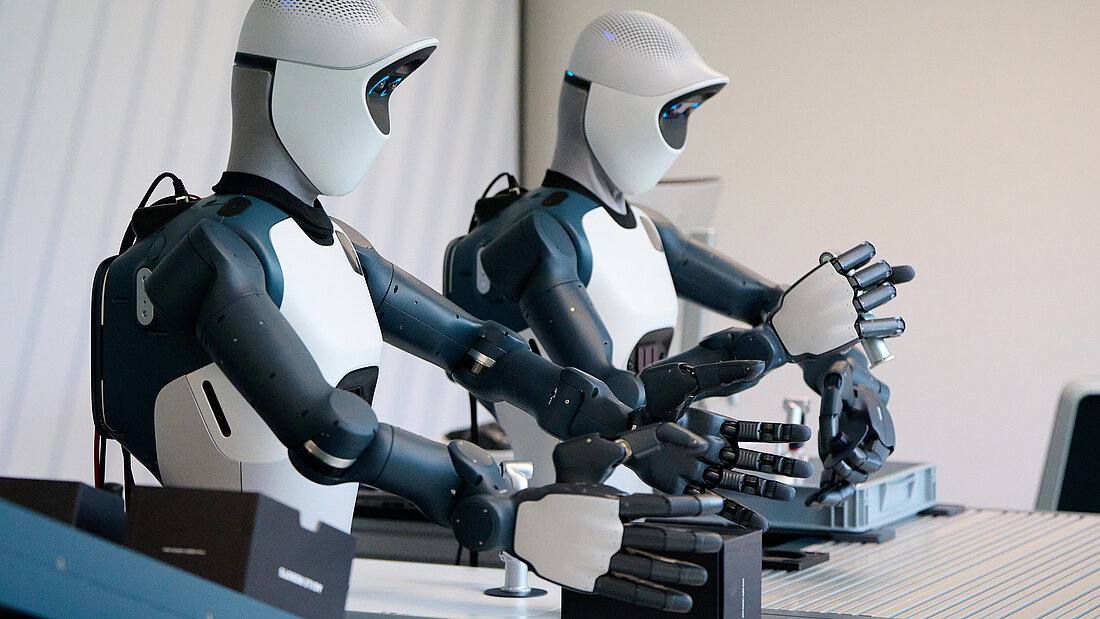
In the factory hall of the not-so-distant future, a new worker has joined the team. It hauls crates from the warehouse, passes tools to colleagues, and assembles components on its own. It never tires, never loses focus and combines dexterity with a remarkable capacity to learn. Its name is Agile ONE, and it’s a humanoid robot designed and manufactured in Germany.
Its maker, Agile Robots, holds the distinction of being Germany's first robotics unicorn: the company achieved a valuation over one billion US dollars all the way back in 2021.
For Peggy Görlitz, robotics expert at Germany Trade & Invest (GTAI), the company's rapid ascent since founding in 2018 is part of a broader trend. “Agile Robots is a textbook example of what makes Germany such a compelling location for deep tech investment: world-class research, a highly skilled workforce, a strong industrial base, and a reliable regulatory environment.”
Read this article to find out:
1. About Germany’s first robotics unicorn.
2. How Agile Robots was “born from a hand”.
3. Why Munich is the ideal base for the next generation of industrial AI.
Born from an agile hand
The company is a pioneer in bringing so-called “Physical AI” (industrial artificial intelligence) into real-world manufacturing environments. Powered by advanced AI control systems, its robots operate with a high degree of autonomy. From its base in Germany, with flagship products like Agile ONE, the company is positioning itself to capture a significant share of the fast-growing global robotics market.
For decades, industrial robots have excelled at single, repetitive tasks but struggled when conditions changed. Humanoids address that limitation directly. They can navigate factory environments designed for human workers and take on an ever-broader range of human
tasks – made possible by dexterous hands and increasingly capable AI.
Agile ONE is, in fact, just the most visible element of a comprehensive Physical AI system, explains Agile Robots Executive Director Rory Sexton: “Physical AI will become the next industrial revolution, with intelligence applied to entire factories rather than to individual robots alone. Eight years on, we've come a long way towards making that real.”
The company was founded in Munich in 2018 as a spin-off of the publicly funded German Aerospace Center (DLR). It grew out of research conducted there by founder and CEO Dr. Zhaopeng Chen – including the development of an innovative robotic hand. The Agile ONE robotic hand possesses almost the same range of motion of a healthy adult hand. It features 21 joints equipped with force-torque sensors and tactile sensors integrated into the fingertips, enabling it to switch fluidly between tasks, from fine manipulation and power gripping to the use of tools.
“We blend German engineering expertise, industrial excellence and cutting-edge Physical AI research with the agility of an international team.”

Made in Bavaria, built for the world
“Born from a hand” (as Sexton aptly puts it), the spin-off has grown into a global robotics company with more than 3,500 employees across 25 locations worldwide and one of the industry's largest research and development teams. Though headquartered in Germany, Agile Robots is thoroughly international in character. Its lead investor, SoftBank, is Japanese, and its Munich headquarters alone employs people from more than 60 nations.
For Martin Talmeier, an AI expert at the Hasso Plattner Institute for Digital Engineering, it is precisely this combination of foundational research and international outlook that underpins the company's success. “The decisive factor wasn't Silicon Valley venture capital, but rather decades of research experience at one of Europe's most renowned robotics institutes, focusing on a core aspect of robotics: hands,” he says.
Agile Robots Executive Director Sexton points to another of Germany's defining strengths: engineering excellence. Humanoid robots, he argues, cannot be built on software alone. “We blend
German engineering expertise, industrial excellence, and cutting-edge Physical AI research with the agility of an international team.” It is a formula that, so far, is working like a dream.
Key Facts: Agile Robots
Founded: 2018 (as a spin-off of the German Aerospace Center)
Unicorn since: 2021 (valuation: over USD 1 billion)
Employees: 3,500+ at 25 sites worldwide
Nationalities at Munich: 60+
Deployed solutions worldwide: 20,000+
Revenue 2025: EUR 320 million
Want to know more about robotics opportunities in Germany?

Peggy Görlitz
GTAI’s automation & robotics expert